0
International day of Older Persons
The journey of the elderly
A person’s life is the lifespan of all biological species from the time of fertilization of the egg of the female with the sperm of the male, which develops in an embryo in the mother’s womb, ultimately giving birth to a baby till the cessation of all bodily functions which is death.
The lifespan from the birth to the death cross various stages, infancy, when the mother nourishes her baby with her milk and then supplemented by other liquids, semi solid foods to whole foods as the baby enters the stage of childhood, followed by adolescence, adulthood, middle age, old age and finally death.
What then is the average normal lifespan of Homo sapiens in India? This is estimated to be 72.7 years up from 63.2 years at the turn of the century.
This has been possible with better health care, lower infant and maternal deaths, vaccination in different age groups, an improvement in sanitation and economic growth.
However the transition from infancy to old age through the various phases in life is faced with the challenges of air and water pollution, contamination in foodstuffs and various other environmental factors, influx of ultra processed food, a sedentary lifestyles and increase in stress and various lifestyle diseases such as high blood pressure, diabetes, obesity, smoking, alcohol and drugs, various mental diseases and genetic factors.
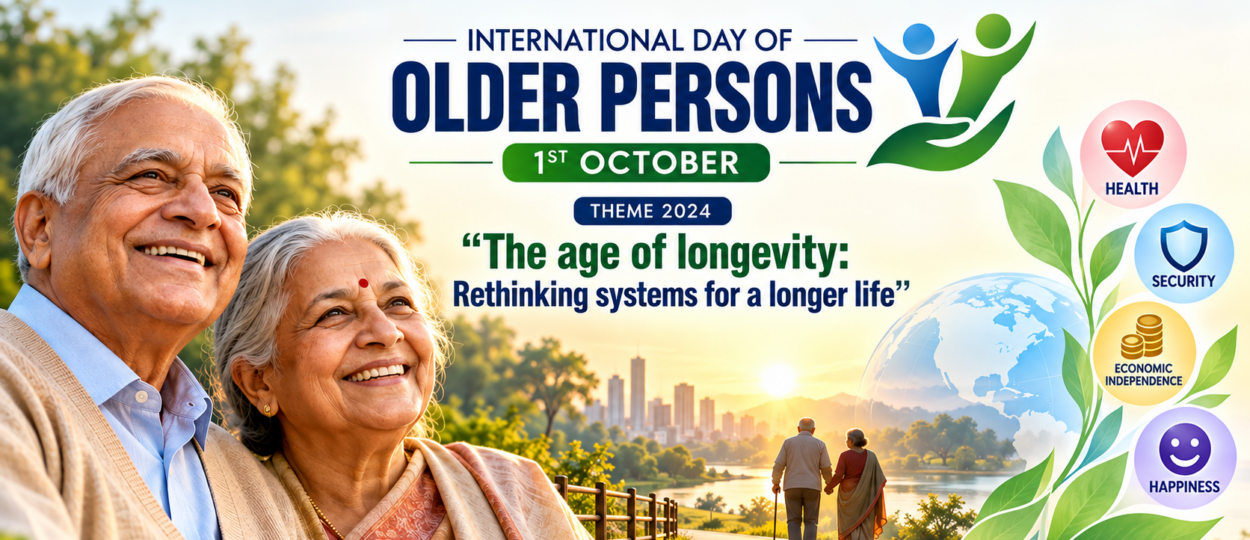
Every year the World Health Organisation celebrates 1st October as International day of Older Persons, to acknowledge the contribution of the elderly in the society, creating awareness about the challenges faced by the elders, acknowledging their wisdom and experiences, providing opportunities to them to overcome these challenges and the difficulties they face in old age.
This year’s theme is ” The age of longevity: Rethinking systems for a longer life, ” enabling them to have a better and longer life in all spheres of life, such as health, security, economic independence and happiness.
Dr Ashwani Kumar Malhotra,
Ludhiana