
0
A Little Forest, A Lot of Peace
Sometimes, we do not have to travel far to feel refreshed. Sometimes, all we need is a little greenery, a quiet path and a few moments away from the rush of everyday life. I discovered this during my recent visit to the Pandit Deendayal Upadhyay Park in Hiranandani Gardens, Powai, where a beautiful Miyawaki forest has been created right inside the garden.
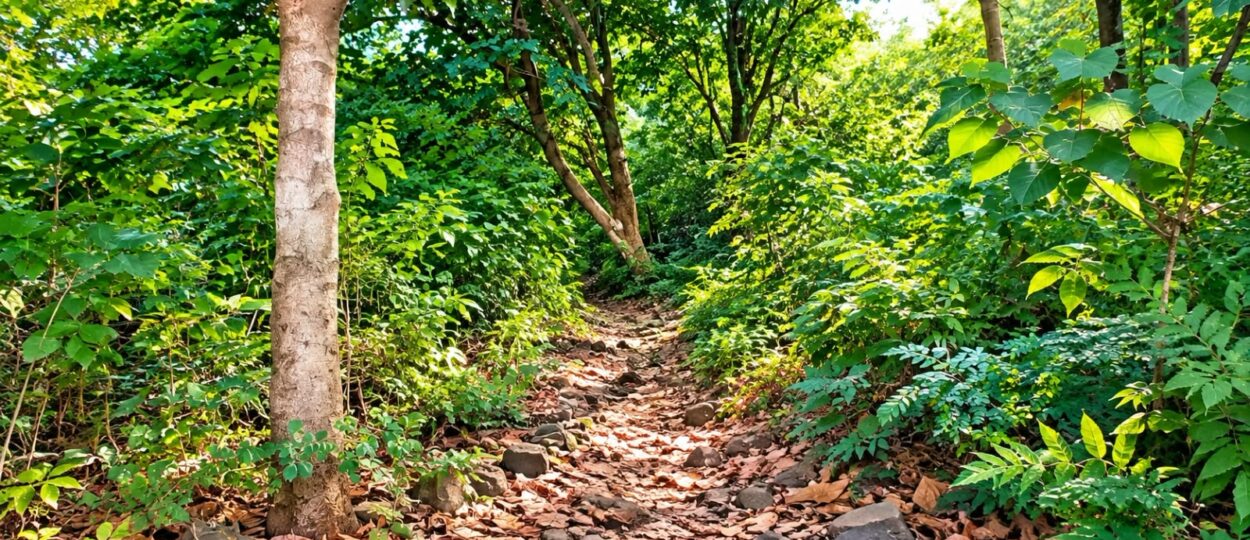
I had walked past this garden before, but this visit felt different. As soon as I entered, the greenery seemed to take over. The paved pathway wound its way through the trees, with thick foliage on either side. The sounds of the city seemed to fade into the background, and for a while, I simply enjoyed being surrounded by trees.
What caught my attention was the High Density Native Miyawaki Forest. A signboard at the entrance explains that the forest has been created using carefully selected native plant species. The aim is to encourage the restoration of native forests, accelerate ecological healing and create a self-sustaining ecosystem that can provide food and shelter for insects, birds and small wildlife.
Walking around, I could see why the concept is so fascinating. The trees and plants are growing close together, creating different layers of vegetation. Some areas are bright and open, while others are wonderfully dense and shaded. There are trees reaching upwards, smaller plants filling the spaces below and thick foliage creating a natural green cover. It feels very different from a conventionally landscaped garden.
One of the things I enjoyed most was simply slowing down. There was no particular reason to hurry. I walked along the winding paths, stopped to look at the trees and flowers, and took photographs whenever something caught my eye. The old trees with their spreading branches and hanging aerial roots added another dimension to the place. They made some corners look almost like little natural hideaways.
I was also intrigued by the variety of plants. The information board lists several native species, including amla, arjun, jamun, karanj, ashoka, baheda and hirda, among many others. Knowing that these plants have been deliberately chosen as part of the forest made me look at the greenery with greater curiosity. It was no longer just a collection of trees; there was a thought and purpose behind it.
What makes this little forest particularly special is its location. It is surrounded by the buildings and busy life of Hiranandani Gardens, yet once you are among the trees, it is easy to forget that you are in the middle of a bustling city. There is something incredibly comforting about finding a patch of nature like this in an urban landscape.
By the time I left, I felt refreshed and rejuvenated. The visit was a gentle reminder that nature has a way of restoring us without asking for anything in return. A walk among trees, a little fresh air and a few quiet moments can sometimes do more for us than we realise.
I went to the garden simply to spend some time amidst nature. I came back with photographs, a greater appreciation for urban forests and, most importantly, a feeling of having pressed the pause button for a little while.
Perhaps that is the real beauty of this little Miyawaki forest in Powai – it gives the city a small piece of wilderness, and gives us a place to breathe.
Did You Know?
A Miyawaki forest is a method of creating a dense, native mini-forest in a relatively small area.
It was developed by Japanese botanist Akira Miyawaki. The method focuses on planting native species very closely together, so the plants compete for sunlight and space and grow rapidly.
Dr. Arwa Saifi